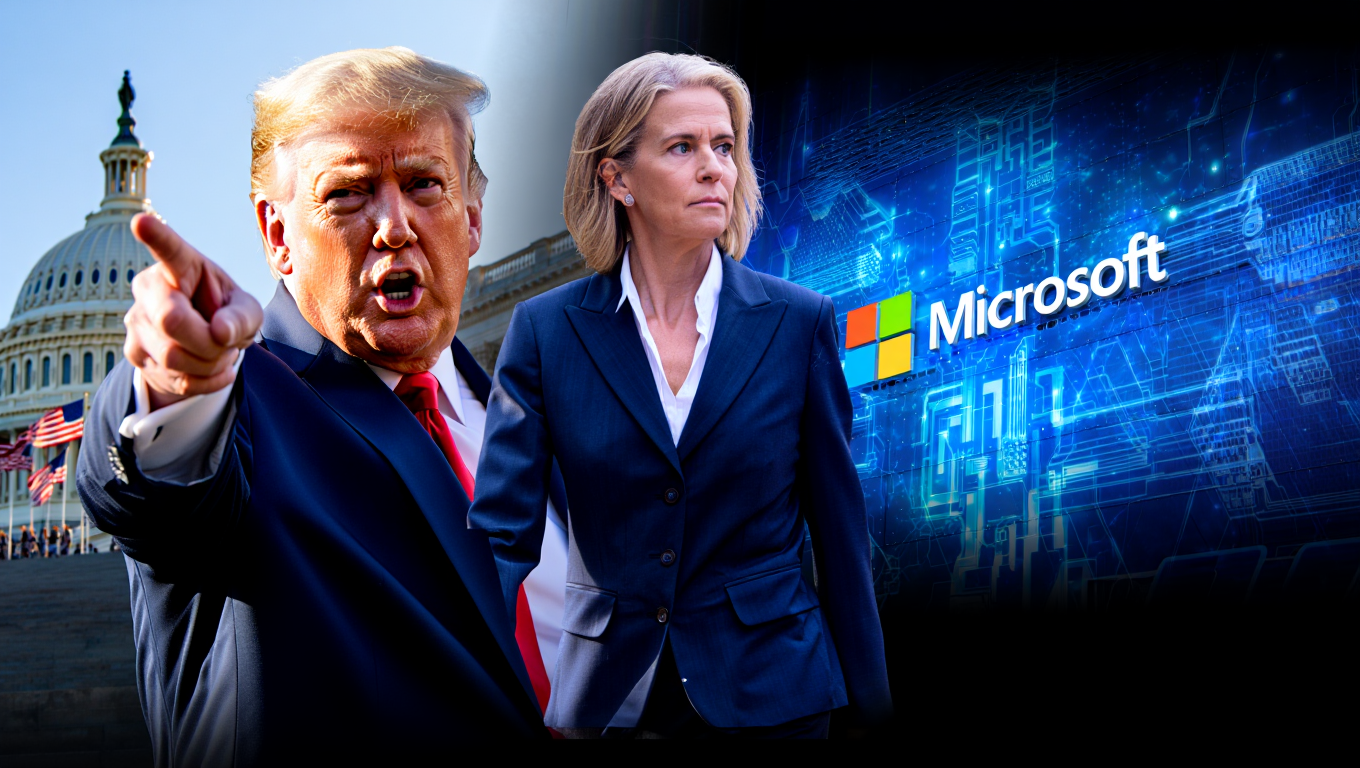
In the latest collision of politics, tech, and national security, President Donald Trump has publicly demanded that Microsoft fire one of its top executives, Lisa Monaco, accusing her of being a “menace to U.S. national security.”
Monaco, who joined Microsoft in July as President of Global Affairs, is no stranger to Washington. She previously served as Deputy Attorney General under President Joe Biden and was a longtime national security aide during the Obama administration. Her résumé reads like a who’s who of high-level government service: counterterrorism advisor, Justice Department leader, and a key figure in the response to the January 6 Capitol riots.
But it’s precisely that history that has drawn Trump’s ire.
Why Trump Wants Monaco Out
On his Truth Social platform, Trump blasted Monaco as “corrupt and totally Trump deranged,” claiming her security clearances had already been revoked and that she had been barred from federal properties. He argued that her senior role at Microsoft—especially given the company’s deep ties to U.S. government contracts—posed an unacceptable risk.
“Because of Monaco’s many wrongful acts, the U.S. Government recently stripped her of all security clearances, took away all of her access to national security intelligence, and banned her from all federal properties,” Trump wrote. “It is my opinion that Microsoft should immediately terminate the employment of Lisa Monaco.”
The demand came just one day after Microsoft reportedly cut off certain cloud services to a division of Israel’s defense ministry following protests, adding another layer of geopolitical tension to the tech giant’s already delicate balancing act.
Microsoft’s Silence
For now, Microsoft has declined to comment. That silence speaks volumes. The company sits at the intersection of business and government, with billions of dollars in federal contracts tied to cloud computing, cybersecurity, and defense. Any move it makes—whether hiring a former Biden official or restricting services abroad—inevitably gets pulled into the political spotlight.
Monaco herself has not responded publicly either.
The Bigger Picture
This isn’t just about one executive. It’s about the increasingly blurred line between corporate leadership and political retribution. Trump has made a habit of targeting individuals he views as adversaries, from former FBI Director James Comey to media figures and now corporate executives.
For Microsoft, the Monaco controversy underscores the risks of hiring high-profile figures with political baggage. On one hand, executives like Monaco bring unmatched expertise in navigating government relations and global security. On the other, they can become lightning rods in a hyper-polarized environment.
What’s Next?
Whether Microsoft stands by Monaco or bows to political pressure will be closely watched—not just in Washington, but across Silicon Valley and beyond. The decision could set a precedent for how tech companies handle politically sensitive hires in an era where the private sector and government are more intertwined than ever.
For now, the standoff remains unresolved. But one thing is clear: the battle over Lisa Monaco’s role at Microsoft is about far more than a single executive. It’s a flashpoint in the ongoing struggle over who gets to shape the future of technology, governance, and power in America.