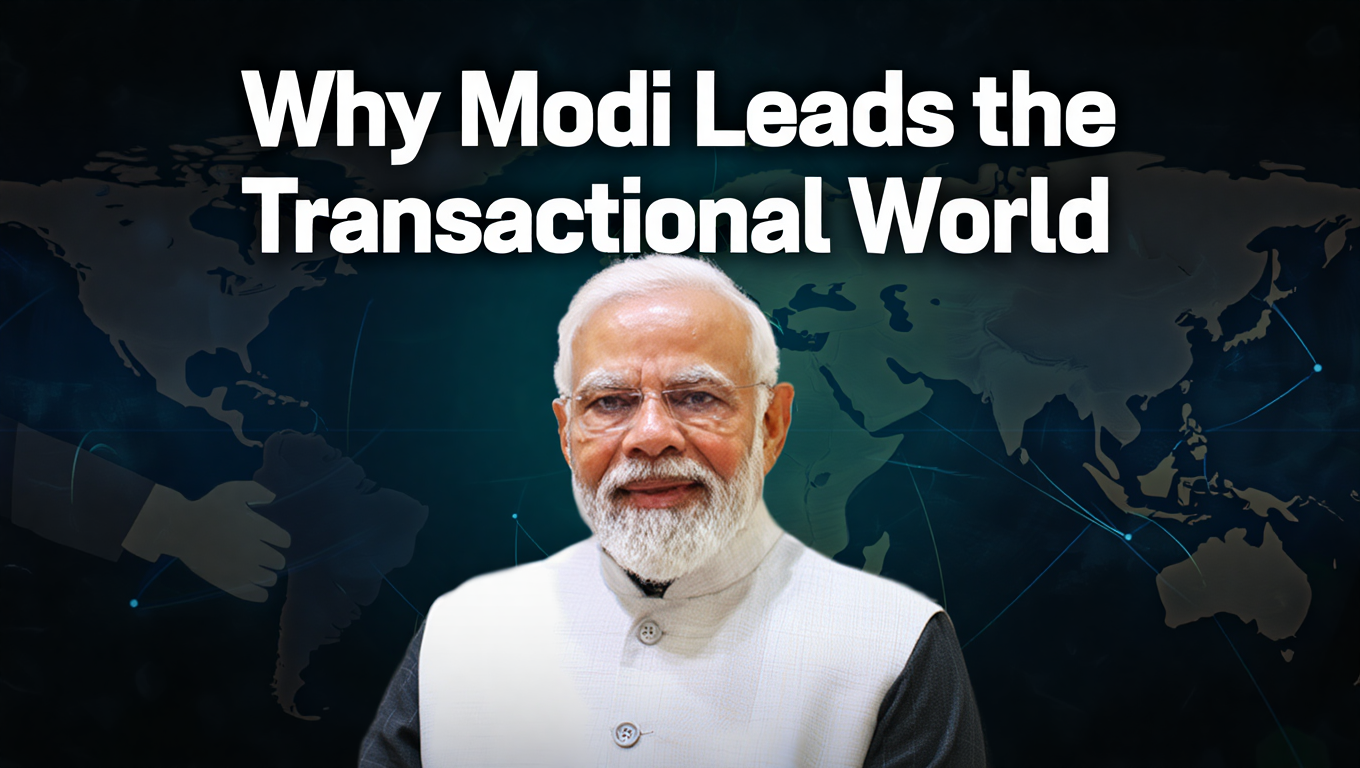
In today’s rapidly shifting global order, ideology is giving way to pragmatism. Nations are no longer bound by rigid blocs or long‑standing doctrines; instead, they are forging tactical alliances that serve immediate interests. At the center of this transformation, Pimco vice chairman John Studzinski identifies Indian Prime Minister Narendra Modi as the “leader of the transactional movement.”
From Non‑Alignment to Multi‑Alignment
India’s foreign policy has historically been shaped by the principle of non‑alignment, most notably under Indira Gandhi. That approach emphasized neutrality during the Cold War, avoiding entanglement in power struggles between the United States and the Soviet Union.
Modi, however, has redefined India’s role on the global stage. His strategy is not about neutrality but about diversification. By engaging with multiple powers simultaneously—even those under sanctions—he has positioned India as a nation that prioritizes its own growth and security above ideological loyalty.
Diversifying Oil and Tech Partnerships
One of the clearest examples of Modi’s transactional approach lies in energy and technology. India continues to import oil from sanctioned states while simultaneously strengthening ties with the United States and other Western economies. This balancing act ensures energy security while keeping doors open for advanced technology collaborations.
Rather than choosing sides, Modi’s government has embraced a flexible framework:
- Energy security through diversified suppliers
- Technology partnerships with both East and West
- Strategic autonomy in global negotiations
This adaptability reflects a world where survival and growth depend on agility, not rigid alignment.
The Global Context: Trump and Xi
Studzinski notes that Modi’s transactional order mirrors broader global trends. Former U.S. President Donald Trump’s “America First” stance emphasized isolationism and self‑interest, while China under Xi Jinping has pursued assertive global expansion. Modi’s India, in contrast, blends elements of both—assertive in protecting national interests, yet open to building bridges wherever opportunities arise.
This makes India a unique player: not retreating inward like the U.S. under Trump, and not aggressively expansionist like China, but strategically transactional—choosing partnerships that deliver tangible benefits.
Why the World Sees Modi as a Transactional Leader
The label of “transactional leader” does not imply short‑sightedness. Instead, it highlights a pragmatic worldview where alliances are judged by outcomes, not ideology. For India, this means:
- Securing resources for a growing population
- Strengthening defense capabilities through diverse partnerships
- Positioning India as a bridge between competing global powers
In a multipolar world, this approach resonates with many nations that no longer see value in rigid ideological camps.
Conclusion: The Rise of the Transactional World
As the global order evolves, Modi’s leadership style reflects a broader shift toward tactical, interest‑driven alliances. By moving beyond the legacy of non‑alignment, he has embraced a model that is both flexible and future‑oriented.
Whether one views this as opportunistic or visionary, the fact remains: Narendra Modi has become a symbol of the transactional world—a leader navigating complexity with pragmatism, ensuring India’s voice is not just heard but strategically positioned in the corridors of global power.