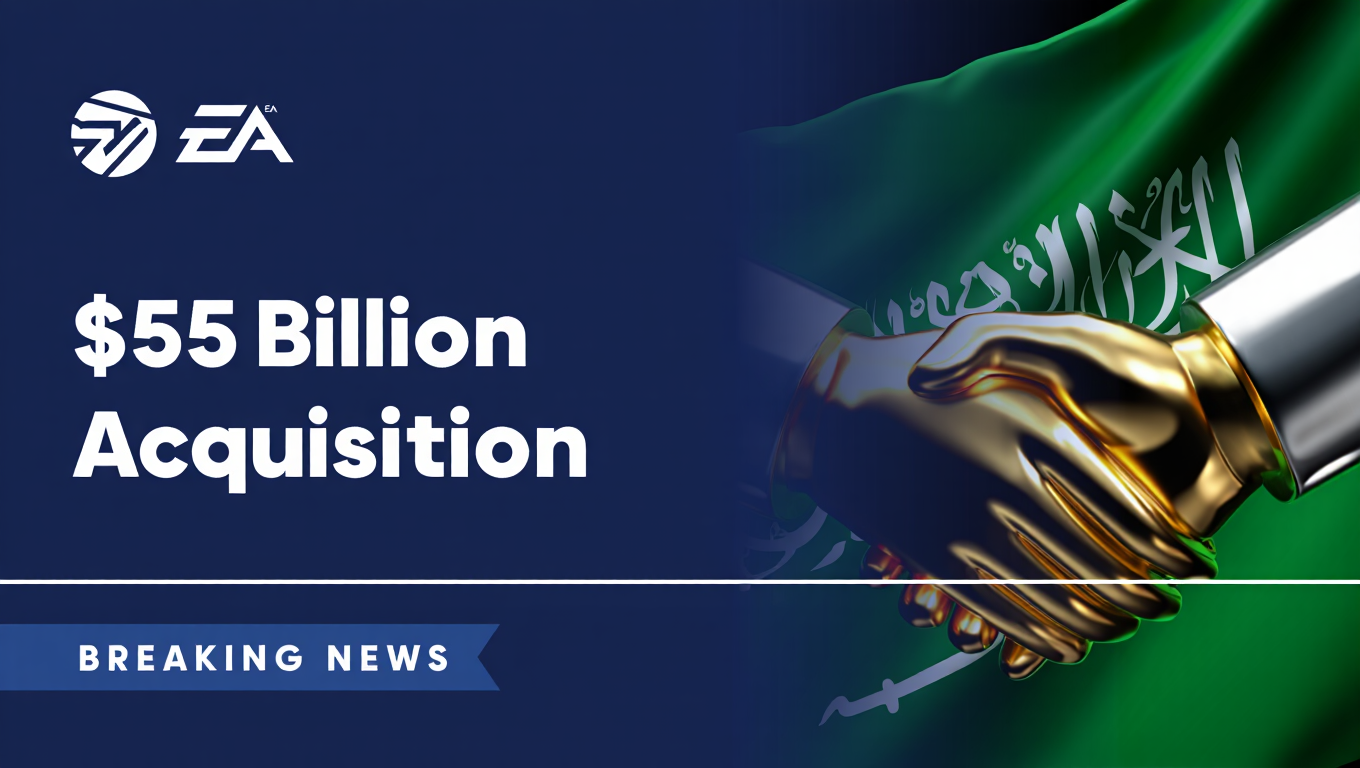
In a move that has sent shockwaves through the global gaming industry, Electronic Arts (EA)—the powerhouse behind franchises like FIFA, Battlefield, The Sims, Dragon Age, and Need for Speed—is set to be acquired by Saudi Arabia’s sovereign wealth fund in a landmark $55 billion deal.
This acquisition marks one of the largest buyouts in entertainment history, signaling not jIn a move that has sent shockwaves through the circular gaming industry, Electronic Arts (EA)—the powerhouse behind franchises like FIFA, Battlefield, The Sims, Dragon Age, and Need for Speed—is set to be acquired by Saudi Arabia’s sovereign wealth fund in a landmark $55 billion deal. This acquisition marks one of the biggest outside buyouts in entertainment history, signaling not just a financial transaction but an outstanding shift in the future of gaming and circular investment trends. just a financial transaction but a major shift in the future of gaming and global investment trends.
EA Goes Private: End of an Era on the Stock Exchange
As part of the agreement, all EA shares will be acquired, and the company will no longer be listed on the stock exchange. For over three decades, EA has been a publicly traded company, shaping the gaming landscape while navigating the pressures of quarterly earnings and shareholder expectations.
Going private means EA will now have more flexibility to innovate without the constant scrutiny of Wall Street. For gamers, this could translate into bolder creative risks, deeper storytelling, and potentially fewer compromises driven by short-term profit goals.
EA Will Stay in California, Leadership Remains Intact
Despite the ownership change, Electronic Arts will remain headquartered in California, continuing its legacy in the heart of the global tech and entertainment hub. Importantly, CEO Andrew Wilson will retain his position, ensuring continuity in leadership and vision.
This stability is likely to reassure both employees and fans that EA’s core identity—its culture of innovation and its commitment to blockbuster gaming experiences—will remain intact.
Why This Acquisition Matters
The acquisition is more than just a financial milestone—it’s a reflection of the growing importance of gaming in the global economy. Saudi Arabia has been investing heavily in the gaming and esports sectors as part of its broader strategy to diversify beyond oil. By acquiring EA, the kingdom secures a major foothold in the console and PC gaming markets, which remain central to the $180+ billion global gaming industry.
For EA, this deal provides access to deep financial resources and long-term backing, potentially fueling the development of next-generation titles, immersive technologies, and expanded esports ventures.
What It Means for Gamers
For millions of players worldwide, the big question is, will this change the games we love?
- Franchises like FIFA (now EA Sports FC), Madden NFL, and Battlefield are expected to continue as flagship titles.
- EA’s creative studios, including BioWare and Maxis, will likely maintain their focus on storytelling-driven games like Dragon Age and The Sims.
- With new financial muscle, EA could expand into emerging areas such as cloud gaming, VR/AR experiences, and global esports tournaments.
While some fans may worry about cultural or creative shifts, the retention of Andrew Wilson as CEO suggests that EA’s DNA will remain consistent, at least in the near future.
Looking Ahead
The acquisition of Electronic Arts by Saudi Arabia’s sovereign wealth fund is not just a business headline—it’s a turning point in the evolution of gaming as a global cultural force. With $55 billion on the table, the deal underscores the value of interactive entertainment in shaping the future of media, technology, and community.
For gamers, developers, and industry watchers alike, the next chapter of EA promises to be one of the most fascinating in its 40-year history.